The examples
Everything runnable lives under examples/glitter_gl/: ten namespaces, nine of them with their own jolt -M:<alias>/bb <name> entry point, one (plasma_shader.clj) that exists only to be required by plasma.clj. They split cleanly along one axis: two exist to fail when a regression lands (check.clj, gl_area_smoke.clj), one exists to be composed and read (plasma_shader.clj), and seven exist to be watched (plasma.clj, ripple.clj, orbit.clj, knot.clj, gears.clj, textured.clj, picking.clj). Only the first two are part of the project's actual regression coverage; say so plainly rather than letting a reader assume a demo is tested because it runs.
check.clj: headless, and the one that pins the widest surface
check.clj: headless, and the one that pins the widest surfacejolt -M:check # or: bb check
Needs no GL context and no display, so it's the fastest thing in the project to run, and the only example safe to call from a machine with no windowing system at all. It asserts three unrelated things in one process:
plasma-shader/shader-speccompiles to GLSL with the declarations the composition promised:a_posattribute,u_timeuniform, thepaletteandplasmaprelude functions. If a future shader-module edit drops a uniform or forgets to thread a prelude function throughmerge-specs, this is what catches it, headlessly, before anyone opens the demo and notices the picture looks wrong.mesh/->floatsproduces a well-formed vertex buffer (positive vertex count, buffer length exactlycount * stride) for each of the three primitive shapes the demo can switch between (cube, sphere, tetra).:gl-areaand:scaleare both present inglitter.widget/specsafter requiringglitter-gl.gtk.
That third assertion is a load-order check, not an ownership check, worth stating precisely because it's easy to misread. :gl-area is registered by this library; :scale is not (invariant #6 in CONTRIBUTING.md; glitter already ships a richer, first-party :scale, and glitter-gl deliberately doesn't shadow it). check.clj's own docstring says as much: :scale "comes from glitter's own native widget, not from glitter-gl.gtk." So if :scale is missing when this runs, the bug is that glitter itself never loaded, not that glitter-gl broke something it owns.
Measured, run just now:
shader: vs 1327 chars, fs 1403 chars
geometry:
  cube    faces=6 tris=12 verts=36 floats=216 stride=6
  sphere  faces=504 tris=952 verts=2856 floats=17136 stride=6
  tetra   faces=4 tris=4 verts=12 floats=72 stride=6
widgets registered: true
check: ok
What it pins: the shader-composition contract and the mesh-buffer contract, both without touching GTK at all. This is the one example a CI runner could execute today with no display, once CI is wired (see testing-and-tasks.md).
gl_area_smoke.clj: live GTK, and the one that pins the correction
gl_area_smoke.clj: live GTK, and the one that pins the correctionjolt -M:gl-area-smoke # or: bb gl-area-smoke
Needs a real display: it opens an actual GtkGLArea under glitter's real reconciler (not a fake renderer) and drives it through :on-realize/:on-render/:on-resize, then reads back a results atom the handlers populated and exits non-zero if any of :realized?, :rendered?, :resized? didn't land, or :error is non-nil. Confirmed by running it here, with a display available:
:results {:realized? true, :rendered? true, :resized? [640 480], :error nil}
What it pins: this is the one example that exercises invariant #2, :gl-area's handlers wiring through the widget spec's :apply closure rather than glitter.widget's :connect hook. That correction was found because the original :connect-based design silently never fired under glitter's real reconciler; a fake in-memory renderer (the kind test/glitter_gl/*_test.clj uses) can't reproduce that failure, because it never routes props through the real apply-props! path at all. This is why the smoke exists as a separate live-GTK example rather than a unit test; see the smoke's own docstring, and gl-area-widget-layer.md for the full mechanics.
It's CI-safe in the sense that bb.edn's smokes task runs it via jolt -M:gl-area-smoke (the exit-code-propagating alias form, not the task form; see testing-and-tasks.md), but CI isn't actually wired for this project yet, so today it's a local gate a contributor runs by hand before opening a PR.
plasma_shader.clj: composed, not run
plasma_shader.clj: composed, not runThis one has no -main, no deps.edn alias, no bb.edn task. It's the shared shader spec: four data maps (base, plasma-module, stripes-module, main-module) combined with a single call:
(def shader-spec
  (sh/merge-specs base plasma-module stripes-module main-module))
This demonstrates glitter-gl.shader's composition model rather than anything glitter-gl-specific. base supplies the vertex stage and framing uniforms; plasma-module contributes a domain-warped, 4-octave plasma field plus an Inigo Quilez cosine palette (both as GLSL text in :prelude, since the shader DSL's data IR only compiles main() bodies, not free functions); stripes-module contributes an independent animated stripe pattern; main-module blends the two by u_mix and applies Blinn-Phong-style lighting to the result. Drop a module from the merge, or add a third, and the visual changes accordingly. That's the point being demonstrated.
What it pins: nothing on its own. It's exercised, not asserted, by check.clj's shader-compile checks (does the merged spec still emit a_pos, u_time, palette(, plasma() and rendered, not verified, by plasma.clj. If you're adding a new shader module to this codebase, this file plus check.clj's three assertions are the pattern to copy: one adds a data map to the merge, the other adds a str/includes? line asserting the thing that map was supposed to contribute is actually in the generated source.
plasma.clj: the one to watch, not the one to trust
plasma.clj: the one to watch, not the one to trustjolt -M:plasma # or: bb plasma
A rotating cube/sphere/tetrahedron lit by the composed plasma+stripes shader, with a glitter-native control panel: shape buttons, five sliders (speed, zoom, scale, warp, blend), a smooth-shading checkbutton, a pause/resume button.
| preview | what it shows |
|---|---|
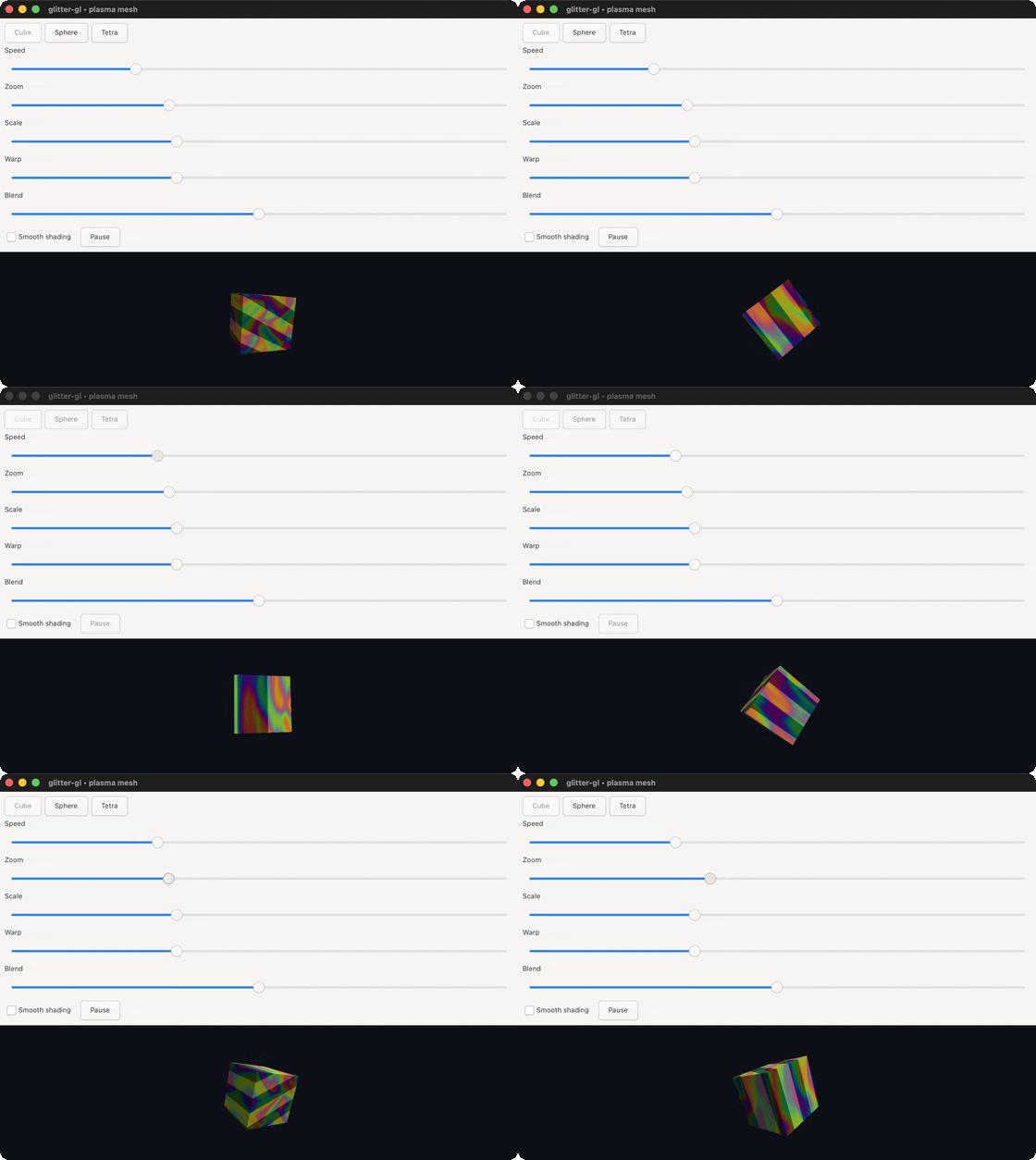 | plasma-cube: the default cube, rotating under the plasma/stripes shader with flat shading, so each face reads as its own solid-color panel, bounded by a sharp edge. |
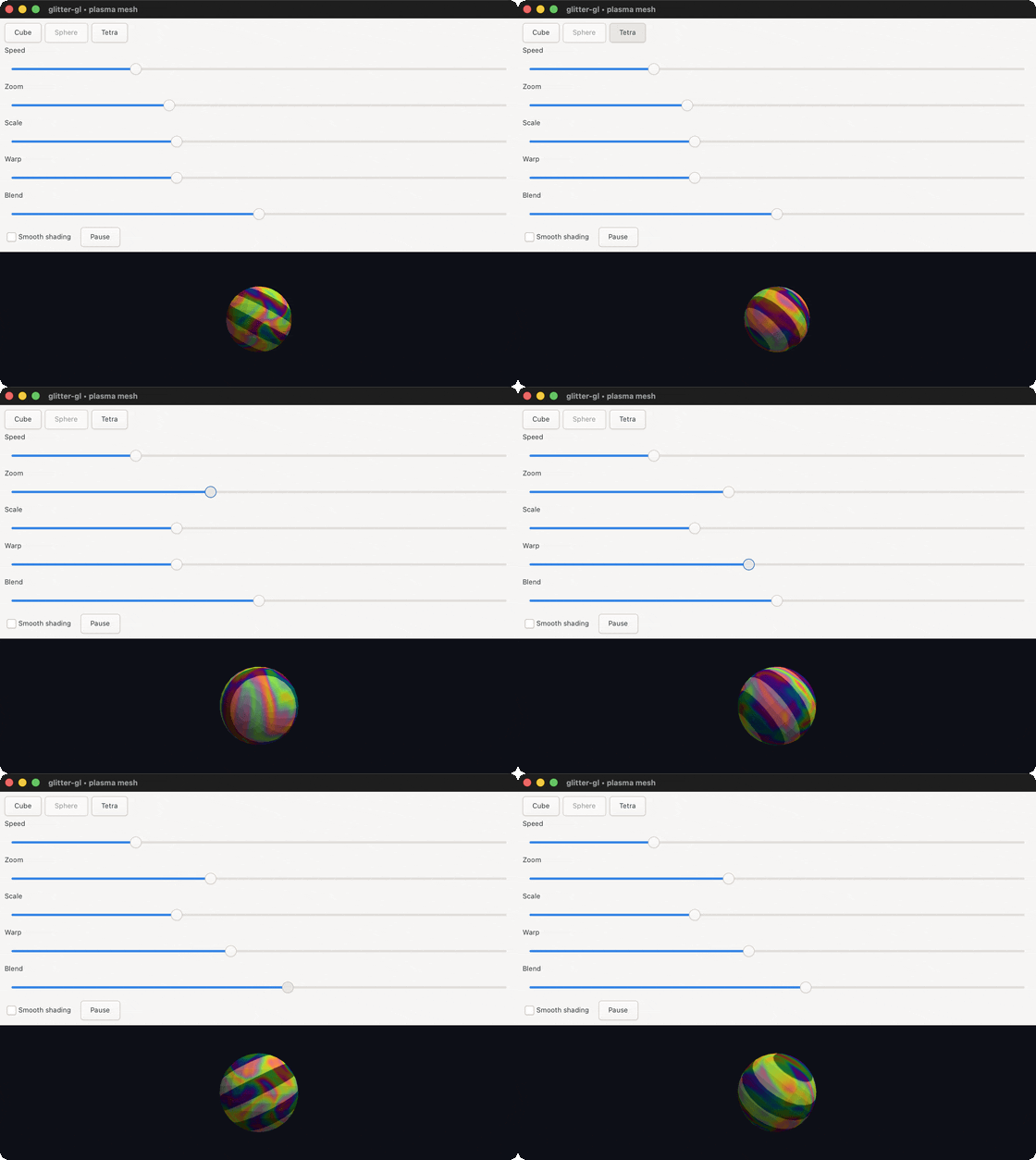 | plasma-sphere: the same shader on a sphere. Same flat-shading toggle (off), but the sphere's much higher facet count makes the color read as a continuous gradient instead of blocks. |
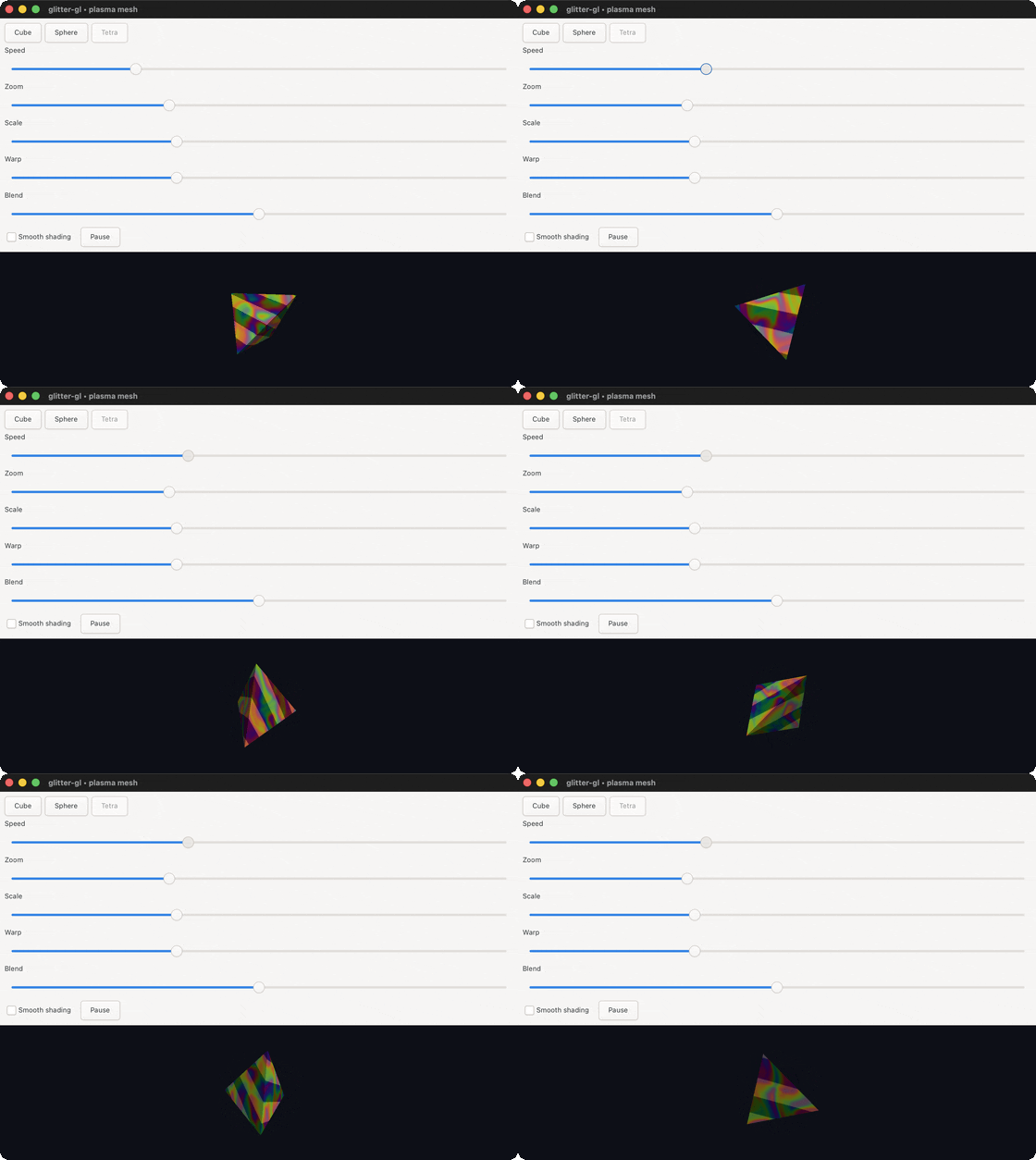 | plasma-tetra: the same shader on a tetrahedron. With only four large triangular faces, this is the clearest case for seeing exactly where flat shading draws the line between one face's color and the next. |
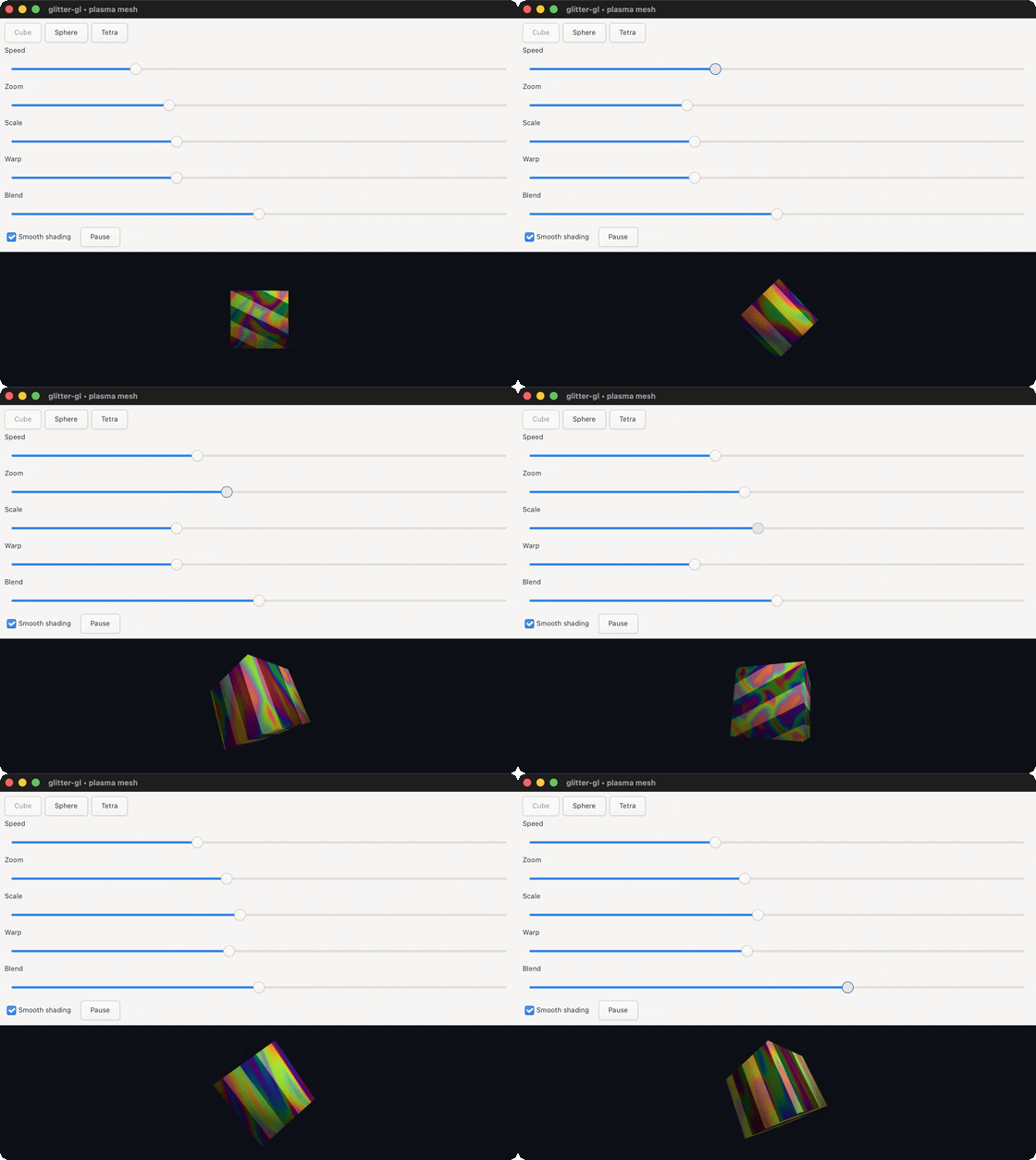 | plasma-smooth: the cube again, with the smooth-shading checkbutton on: the same plasma pattern now flows continuously across an edge instead of jumping between two flat blocks. The direct visual contrast with the take above. |
Every preview is a real recording of the demo running, not a mockup. They are committed under docs/demos/, and each thumbnail links to the full-size recording.
Be honest about what this one is not: it is not part of bb.edn's smokes task, it makes no assertions, and nothing fails when its picture regresses except a human noticing it looks wrong. Per the organising principle for this whole guide (an example that exists only to be pretty is worth less than one that fails when a regression lands), this is the "pretty" one. (It does support a GLITTER_GL_DEMO_QUIT_MS env var, mirroring the original's GLIMMER_GL_DEMO_QUIT_MS, that auto-closes the window after N ms, useful for confirming it launches without hanging, but that's a liveness check, not a correctness one, and it isn't wired into any automated task today.)
What it is worth reading for is invariant #4, in the clearest form anywhere in this codebase.
Why it wires :gl-area directly instead of going through reactive-area
glitter-gl.app/reactive-area exists precisely to keep GL plumbing out of application code: build a scene as data, hand it to reactive-area, get back a ready-made :gl-area prop map. plasma.clj doesn't use it. It wires on-realize/on-render/on-resize/on-tick by hand, the same way gl_area_smoke.clj does.
The reason is provenance, not oversight: plasma.clj's own docstring says it's "ported from gl-demo.core... converting its reactive-cell control panel... into glitter's single state atom + data-driven action dispatch," while "the GL render-loop plumbing (on-realize/on-render/on-resize/on-tick) is otherwise unchanged". Direct wiring is how the upstream glimmer-gl demo already worked, and the port kept that shape rather than routing it through the newer reactive-area layer built later in this project's history.
The honest cost of that choice: until this arc, reactive-area had direct unit coverage (app_test.clj checks its returned prop map's shape and defaults) but no example that mounted it end to end against a real :gl-area and actually rendered through it. See orbit.clj below for the example that closes that gap, scene-and-app.md's "What reactive-area actually is" section for the full "honest status" note, and limitations.md for this and the project's other known gaps.
The two things it demonstrates about the state split
plasma.clj is the clearest illustration of invariant #4 (reactive-area's own handlers read/write state directly rather than dispatching, the same principle plasma.clj follows even though it bypasses reactive-area itself), because both halves of the split sit right next to each other in one file:
- The GL handlers read and write plain atoms directly.
on-tickdoesn't dispatch anything; it just mutates:(defn on-tick [_area] (when-not (:paused @state) (swap! clock + (* (double (:speed @state)) frame-dt))))
clock, viewport, and gl-state are all defonce atoms outside the reconciled view entirely, updated 60 times a second by GTK's frame clock, exactly the kind of state invariant #4 says has no business round-tripping through swap!-then-re-render.
- The control panel dispatches actions like any other glitter UI. Every slider and button emits a data tuple instead of calling a function:
   [:scale {:min lo :max hi :step step :value value :digits 2 :hexpand true
            :on {:value-changed [[:effect/assoc-in [key] [:glitter/value]]]}}]
and the checkbutton/pause controls go through registered actions (:action/toggle-smooth, :action/toggle-paused) that expand to the same :effect/assoc-in primitive, dispatched through glitter.nexus exactly the way todo.clj/crud.clj do in glitter's own demo set.
Put side by side, the contrast answers a question a new contributor will otherwise have to reconstruct from first principles: which category does my new piece of state belong to? If it changes on every frame and nothing in the UI needs to react to a click causing it, it's a plain atom. If a person clicks or drags something, it's an action.
ripple.clj: the shader DSL with no geometry to speak of
ripple.clj: the shader DSL with no geometry to speak ofjolt -M:ripple # or: bb ripple
A single primitives/quad scaled to fill clip space directly, no MVP, no camera, no lighting, no material system, textured by a fragment shader composed through glitter-gl.shader/merge-specs from two small modules: a drifting concentric-ripple field, and a wave-to-color mapping with a soft corner vignette. on-tick advances a time uniform; on-render draws.
The claim this one makes is about the library's two independent halves. plasma.clj already shows a lit solid whose surface comes from a composable shader, so a second lit-solid-plus-shader demo would say nothing new. ripple.clj has no geometry to speak of, and demonstrates that the shader-spec DSL is useful entirely on its own, with no mesh half of the library involved at all.
| preview | what it shows |
|---|---|
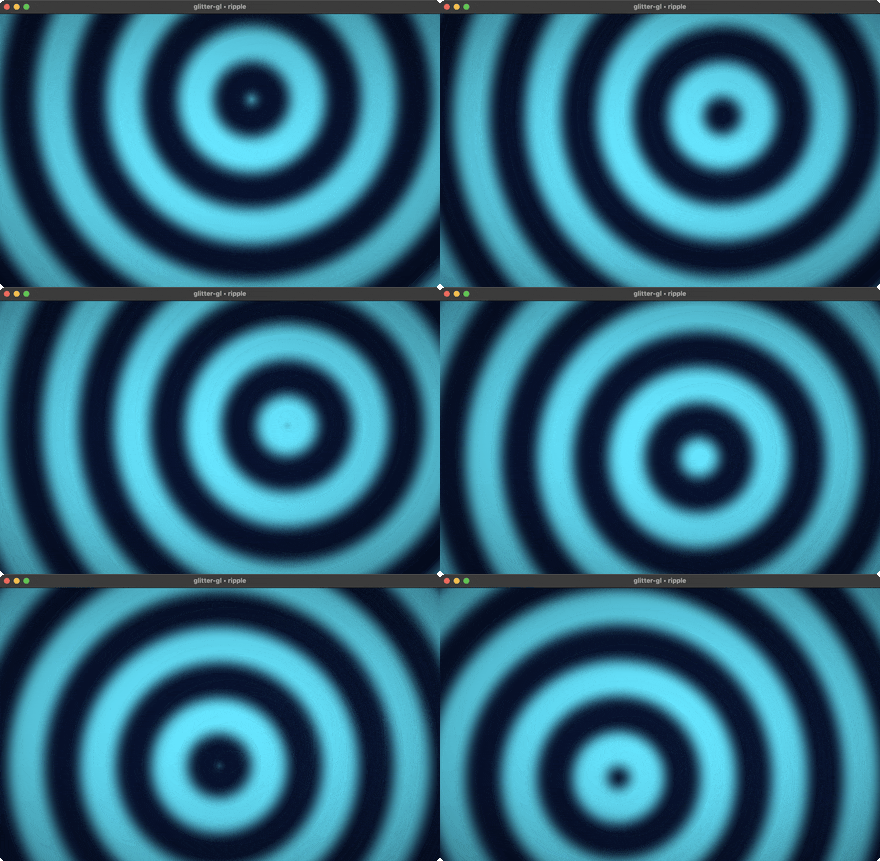 | ripple: concentric rings drifting across a full-window quad, generated entirely by the fragment shader; there is no mesh visible because there is nothing to the geometry but the quad. |
Like plasma.clj, this is watched, not trusted: it makes no assertions and is not part of bb smokes. bb.edn's own comment on the smokes task explains why: what makes an example usable as a smoke is that it raises or exits non-zero when something is wrong, not that it calls System/exit. ripple.clj wraps program construction in (try ... (catch Throwable _ nil)), so a broken shader just prints and the process still exits 0; folding it into smokes would look like a gate that cannot fail.
orbit.clj: the first live reactive-area demo
orbit.clj: the first live reactive-area demojolt -M:orbit # or: bb orbit
Six distinct solids drawn from the library's own shapes (primitives/cuboid, primitives/sphere, primitives/tetrahedron, and polyhedra's octahedron/icosahedron/dodecahedron) orbit above a lit, shadowed ground plane, each at its own radius, phase, and speed. Unlike every other example, it's mounted through glitter-gl.app/reactive-area rather than direct :gl-area wiring, and its orbit phase lives in glitter's own shared state atom rather than a private clock atom, so that scene-fn is a genuine function of state.
That choice is the whole point of the example, not incidental: reactive-area had direct unit coverage but had never before been mounted against a real :gl-area. orbit.clj closes that gap; see limitations.md for the before-and-after, and scene-and-app.md for the real cost this example pays, by design, for driving glitter's watched state atom on every tick, which plasma.clj and ripple.clj avoid.
| preview | what it shows |
|---|---|
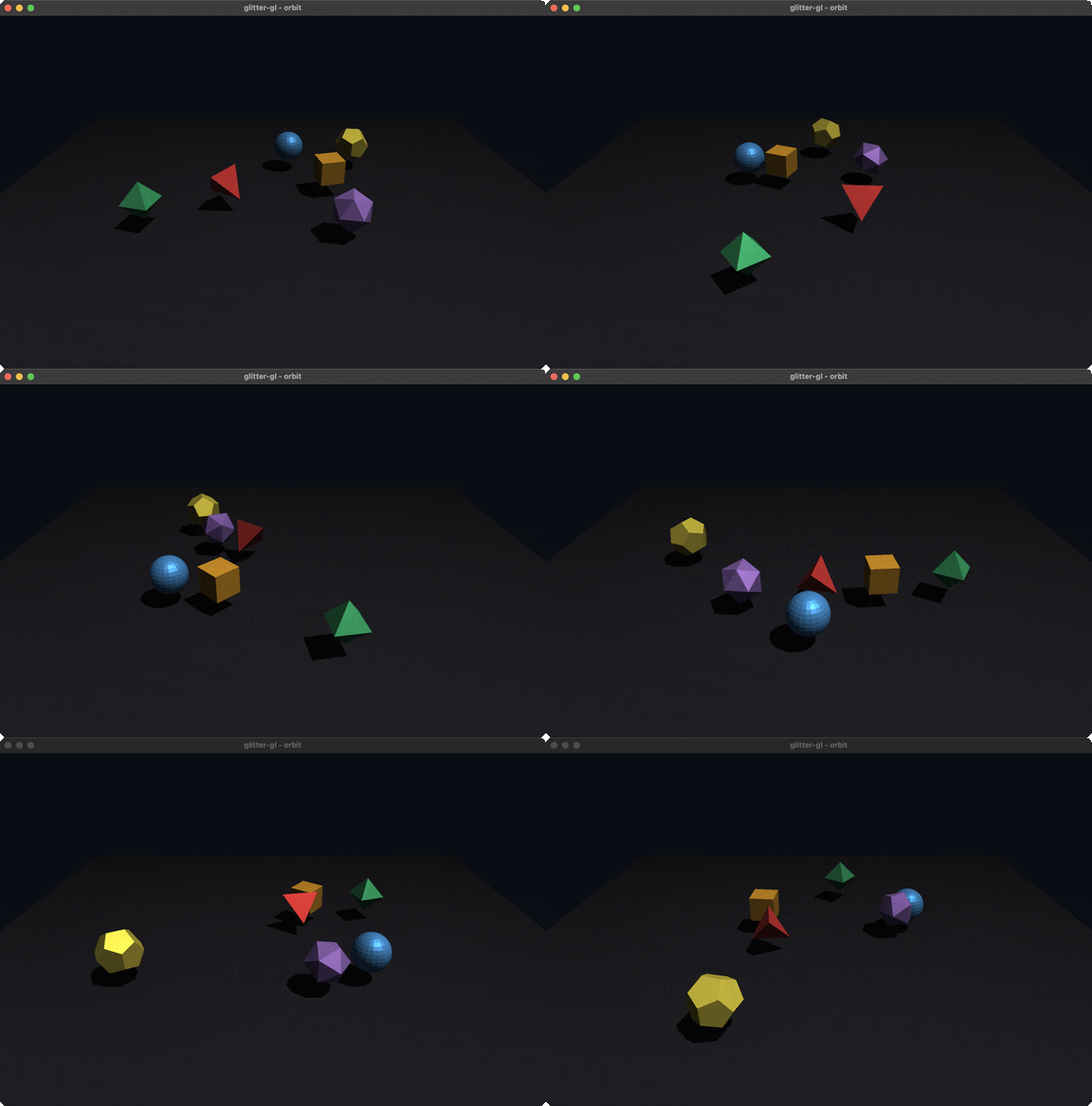 | orbit: six differently-shaped, differently-colored solids circling a shadowed ground plane at independent speeds, most also spinning on their own axis. |
Like plasma.clj and ripple.clj, watched not trusted: no assertions, not part of bb smokes, for the same reason.
knot.clj: geometry the library does not ship
knot.clj: geometry the library does not shipjolt -M:knot # or: bb knot
A (2,3) trefoil torus knot, swept as a tube and rendered as a single rotating lit solid: 2400 quads generated from scratch by a pure function (torus-knot-faces) from three radii (major R, winding amplitude r, tube radius tube-r) and two counts (samples, sides), handed straight to mesh/mesh. Everything downstream of the generator, upload, shader, draw, is the exact single-mesh plumbing plasma.clj already established, wired directly to :gl-area rather than through reactive-area (one mesh, no scene composition, nothing for reactive-area to coordinate).
The point is what primitives.clj and polyhedra.clj are not: a starting set, not the boundary of what mesh/mesh can build. No other example generates its own geometry; every other one draws a shape the library already ships as a constructor.
| preview | what it shows |
|---|---|
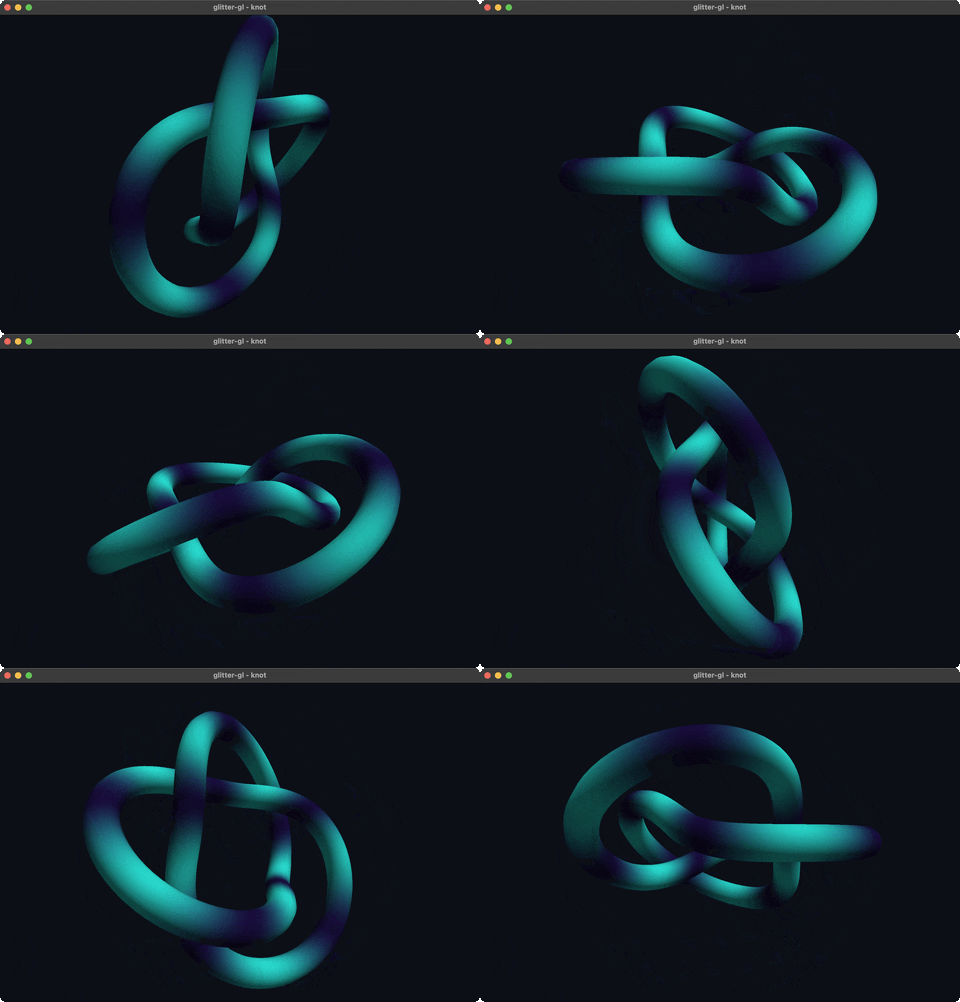 | knot: a rotating, smooth-shaded trefoil torus knot, its tube visibly self-crossing the way a genuine (2,3) knot does rather than closing into a plain ring. |
Like the other two, watched not trusted: no assertions, not part of bb smokes.
gears.clj: polygon/tessellate's first consumer outside its own test suite
gears.clj: polygon/tessellate's first consumer outside its own test suitejolt -M:gears # or: bb gears
Three cog outlines, flat-shaded, spinning in a camera-less 2D scene. polygon/cog (added to glitter-gl.polygon in this arc, ported from thi.ng/geom's thi.ng.geom.polygon/cog; see NOTICE.md) builds a toothed outline per cog, and polygon/tessellate ear-clips that outline directly into a triangle list. Every other example draws geometry glitter-gl.mesh already tessellates for it (primitives.clj/ polyhedra.clj shapes go through mesh/->floats); mesh.clj never requires glitter-gl.polygon at all, and has its own unrelated tessellate-face over Vec3 meshes. Before this file, polygon/tessellate's only caller anywhere was its own test suite; this is the first thing in the project to hand it a shape for real.
Each cog's triangle buffer is built once, at namespace load; on-render never rebuilds geometry, it only rotates the three buffers, at different signed speeds so adjacent cogs counter-rotate, via a per-cog model matrix, the same way knot.clj spins its tube by matrix alone. m/ortho stands in for m/perspective: there's no camera, just a flat orthographic frame wide enough to hold all three cogs side by side.
| preview | what it shows |
|---|---|
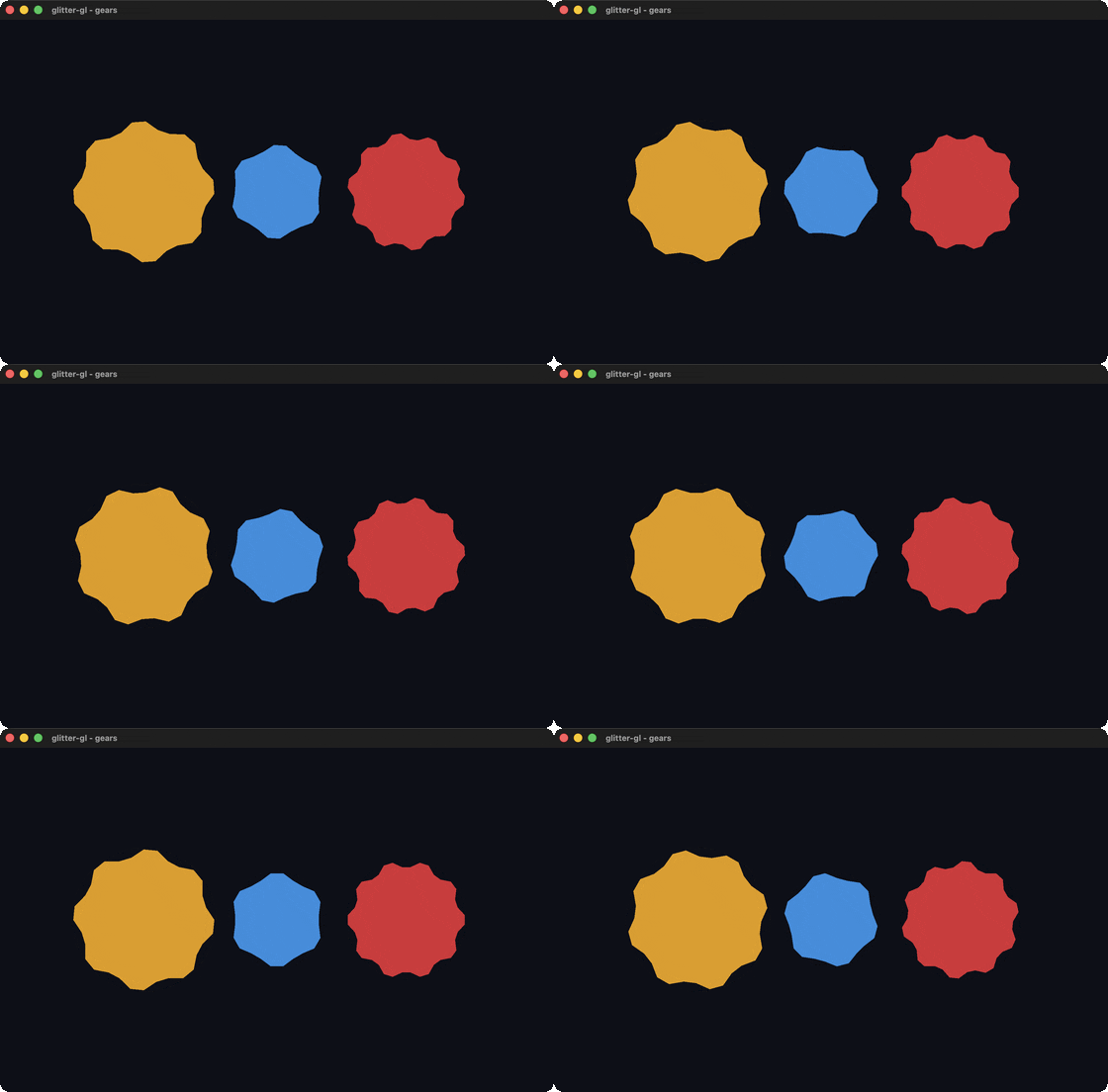 | gears: three cog outlines of different radii and tooth counts, spinning at different signed rates so the two outer cogs turn one way and the middle one turns the other. |
Like the others above, watched not trusted: no assertions, not part of bb smokes.
textured.clj: the first shader spec to sample a texture
textured.clj: the first shader spec to sample a texturejolt -M:textured # or: bb textured
A rotating cube wearing a procedurally generated checkerboard: no image file, no binary asset in the repo. checkerboard-ptr writes an RGBA byte buffer straight into foreign memory at realize time. p/cuboid supplies the mesh; since mesh/->floats only ever emits position and normal, this file builds its own interleaved position+UV buffer by hand (cube-uv-floats), matching UV corners to p/cuboid's own per-face winding so every face shows the full checkerboard once.
This is the first consumer of glitter-gl.gl's texture FFI (gl-gen-textures/gl-bind-texture/gl-tex-image-2d/ gl-tex-parameter-i/gl-active-texture) outside renderer.clj's internal shadow-map path and the test suite (offscreen_test.clj exercises the same fns headlessly), and the first shader spec in the project to declare a :sampler2D uniform. Worth stating plainly, since "first user of X" invites the assumption that X was broken: no library gap was found here. shader.clj's set-uniform! already had a working :sampler2D branch, uploading the texture unit index via glUniform1i; it had simply never had a caller before this file.
The one uniform that's easy to get wrong, :u_texture, must be set to the texture unit index (0), never the GL texture id gl-gen-textures returned; on-render sets it correctly on every frame, the same "set every declared uniform explicitly" discipline ripple.clj's ns docstring describes.
| preview | what it shows |
|---|---|
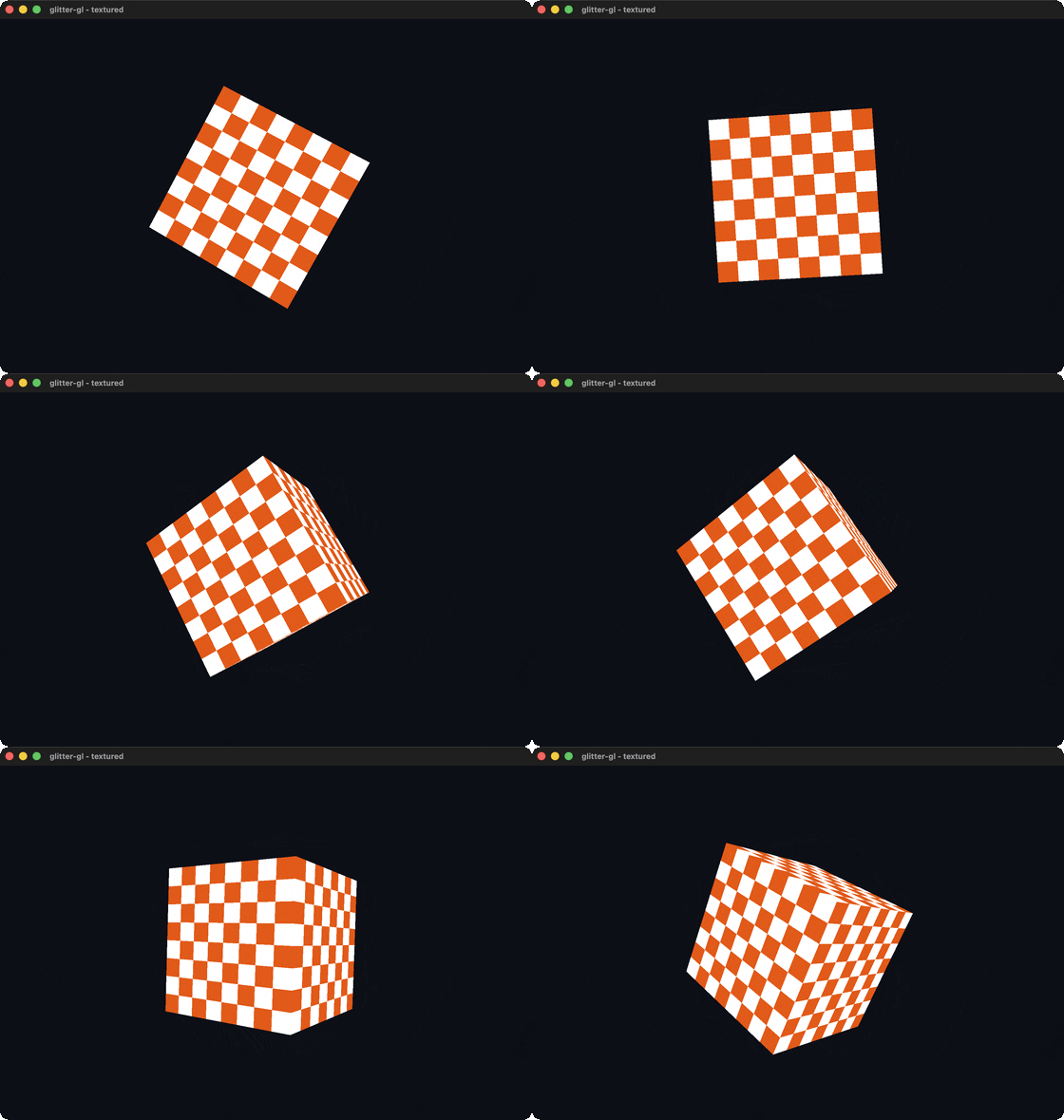 | textured: a cube rotating on two axes, its faces showing a crisp white-and-orange checkerboard baked at runtime rather than loaded from a file. |
Like the others above, watched not trusted: no assertions, not part of bb smokes.
picking.clj: the first example to react to the pointer
picking.clj: the first example to react to the pointerjolt -M:picking # or: bb picking
A ground plane and a back wall, with a small sphere marker drawn at wherever the pointer's world-space ray hits one of them: amber for the ground, magenta for the wall, so the switch is visible without reading coordinates. Every other example draws geometry that never reacts to input; this is the first to use pointer events at all, and the first consumer of glitter-gl.intersect (specifically its ray-plane function) outside its own namespace and test suite.
on-motion only stores the latest pointer position; the actual raycast happens in on-render, every frame, re-reading whatever pointer-pos currently holds, so a fast pointer doesn't queue extra work per event. Unprojecting a screen pixel into a world-space ray needs the real perspective divide: glitter-gl.matrix/transform-point is documented as an affine-only transform (it assumes a constant w row, true for model/view matrices but not for a projection matrix), so this file supplies its own unproject, doing the full four-component transform including the divide by w. It re-derives the divide-by-w half of thi.ng/geom's unproject-point (src/thi/ng/geom/matrix.cljc): the port that produced matrix.clj never carried that function over, so there was nothing to call. See NOTICE.md for the full attribution.
A real widget-layer trap, found live during this arc: GtkGLArea's resize signal reports the framebuffer size in device pixels (2x on a Retina display), while :on-motion reports logical points. Unprojecting a pointer position using the viewport dimensions captured from resize is silently wrong by the display's scale factor on a Retina display, and invisible on a non-Retina one, where the two units happen to coincide. picking.clj avoids it by sourcing width and height from glx/widget-width/glx/widget-height (both logical) rather than from its own @viewport atom (kept for gl/gl-viewport, which does want device pixels). See gl-area-widget-layer.md for the full mechanics.
| preview | what it shows |
|---|---|
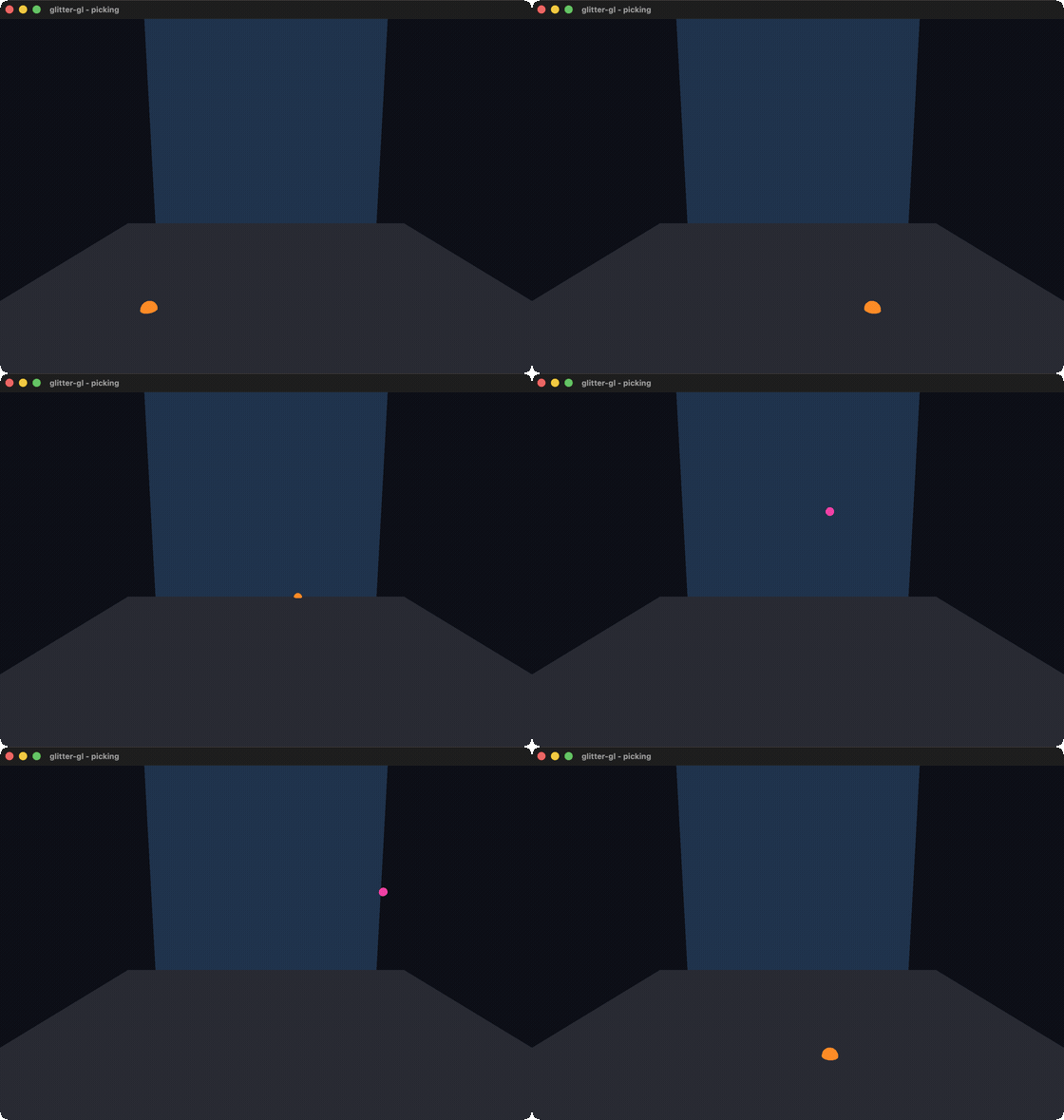 | picking: a marker tracking the pointer across a ground plane and a back wall, switching color at the boundary where the ray leaves one plane and hits the other. |
Like the others above, watched not trusted: no assertions, not part of bb smokes.
A forced or content-triggered bb record would destroy this GIF, not reproduce it. picking is pointer-driven, and scripts/demo_manifest.edn's steering is keyboard-only, so an actual re-capture of this take would show the scene at rest, with no marker at all, silently overwriting the committed GIF with an empty one. That risk is not standing today: docs/demos/ledger.edn's picking entry already matches this file's current content hash, so an ordinary bb record --only picking (or --dry-run) reports it up to date and skips it (1 items, 0 to capture, 1 up to date, verified). The hazard becomes real only if picking.clj changes, invalidating that hash, or if --force is passed. Under either condition: the committed GIF was captured outside the normal recording pipeline, by synthesizing pointer motion with Quartz CGEventPost while taking a screenshot per frame; reach for that approach instead of bb record.
Adding an example
Six touchpoints; skip one and the example is invisible to something:
- The namespace, under
examples/glitter_gl/. - A
deps.ednalias, sojolt -M:<name>works without babashka::gl-area-smoke {:extra-paths ["examples"] :main-opts ["-m" "glitter-gl.gl-area-smoke"]} - A
bb.edntask, sobb <name>works and it shows up inbb info:gl-area-smoke {:doc "Live-GTK smoke: :gl-area construct/realize/render/resize" :task (shell "jolt" "-M:gl-area-smoke")} - A
bb.edndemos:examplesrow, sobb record's gallery pipeline knows the example exists:{:id "orbit" :group "orbit" :desc "six distinct solids orbiting above a ground plane, lit and shadowed, mounted via reactive-area" :src "examples/glitter_gl/orbit.clj" :run "jolt -M:orbit"} - A
scripts/demo_manifest.edngroup entry, matching the row's:groupkey, so the recorded GIF gets its own gallery heading:{:key "orbit" :title "the orbit demo"} - If it's a live-GTK example that asserts and exits non-zero on failure, add it to
bb.edn'ssmokestask sobb smokesactually runs it:smokes {:doc "Run every live-GTK smoke and headless check in sequence; stops at the first failure" :task (do (shell "jolt" "-M:gl-area-smoke") (shell "jolt" "-M:check"))}
Skipping this step doesn't break the new example; it just means nobody running bb smokes (or a future CI job built on it) ever exercises it, the same silent gap plasma.clj has today by design.
A smoke's own -main must exit non-zero on failure and be invoked via jolt -M:<alias>, never the bare jolt <task> shorthand; see testing-and-tasks.md for why the task form can't be trusted to fail a build at all.